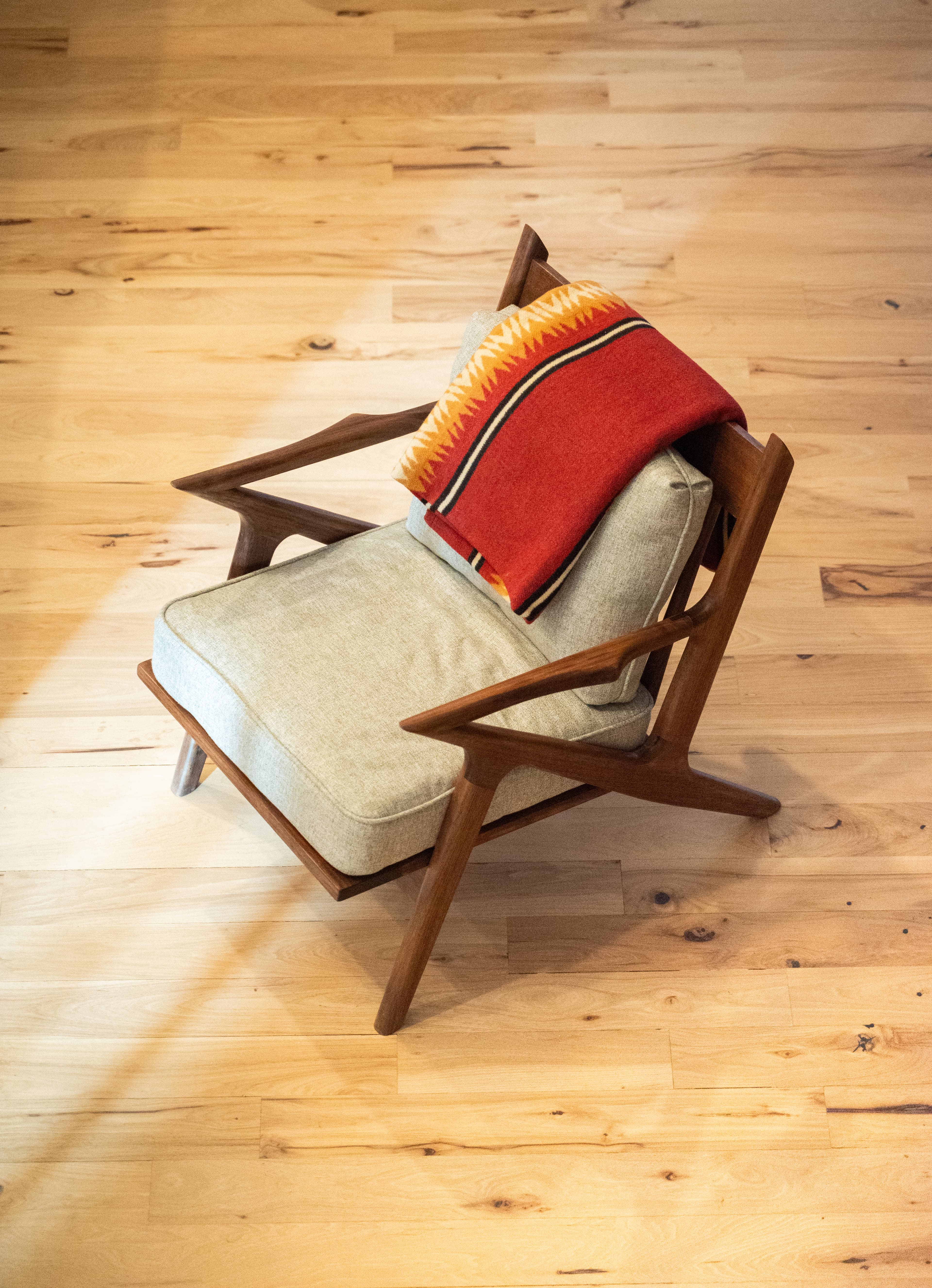
A chair designed and built from scratch.
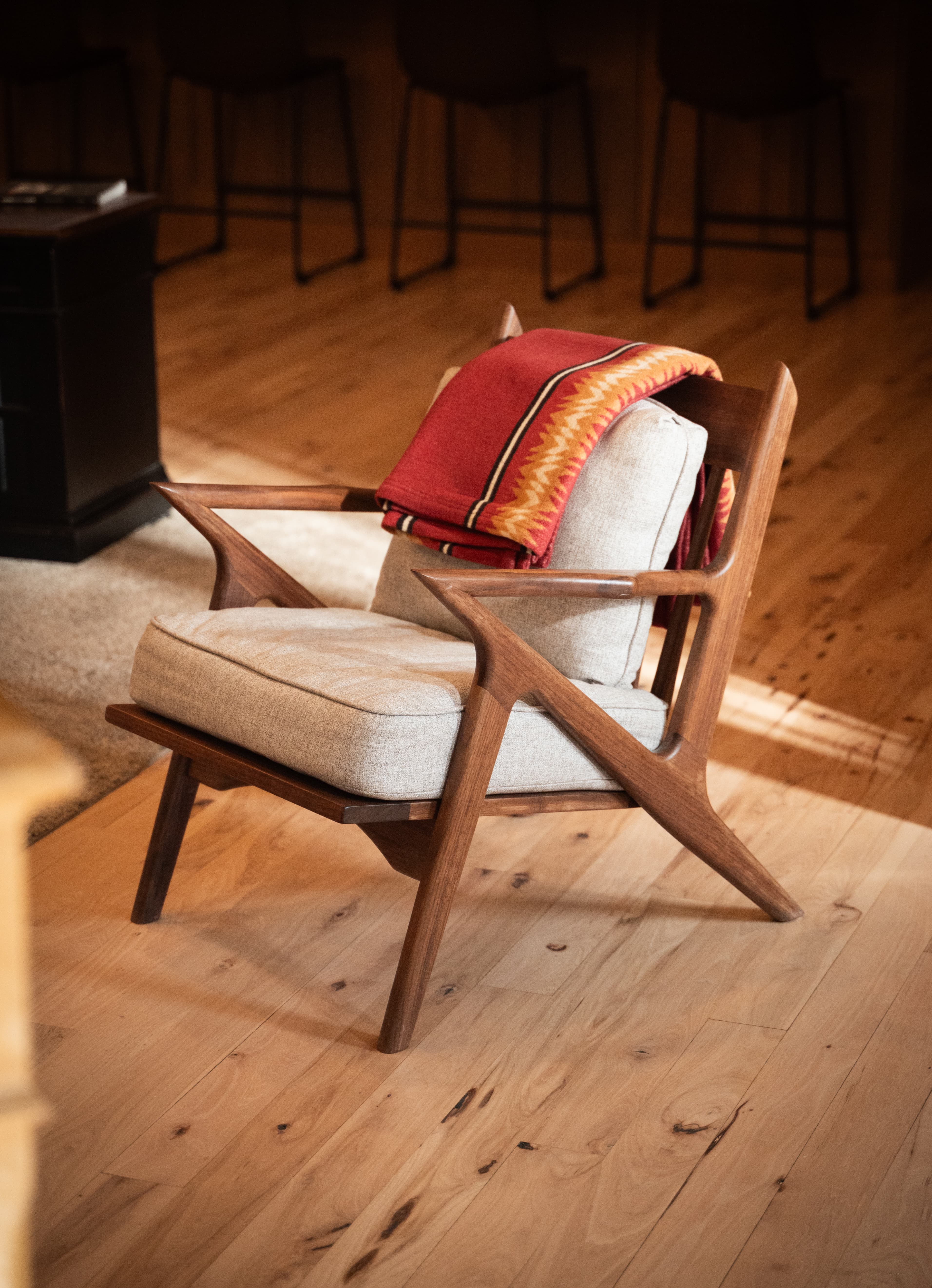
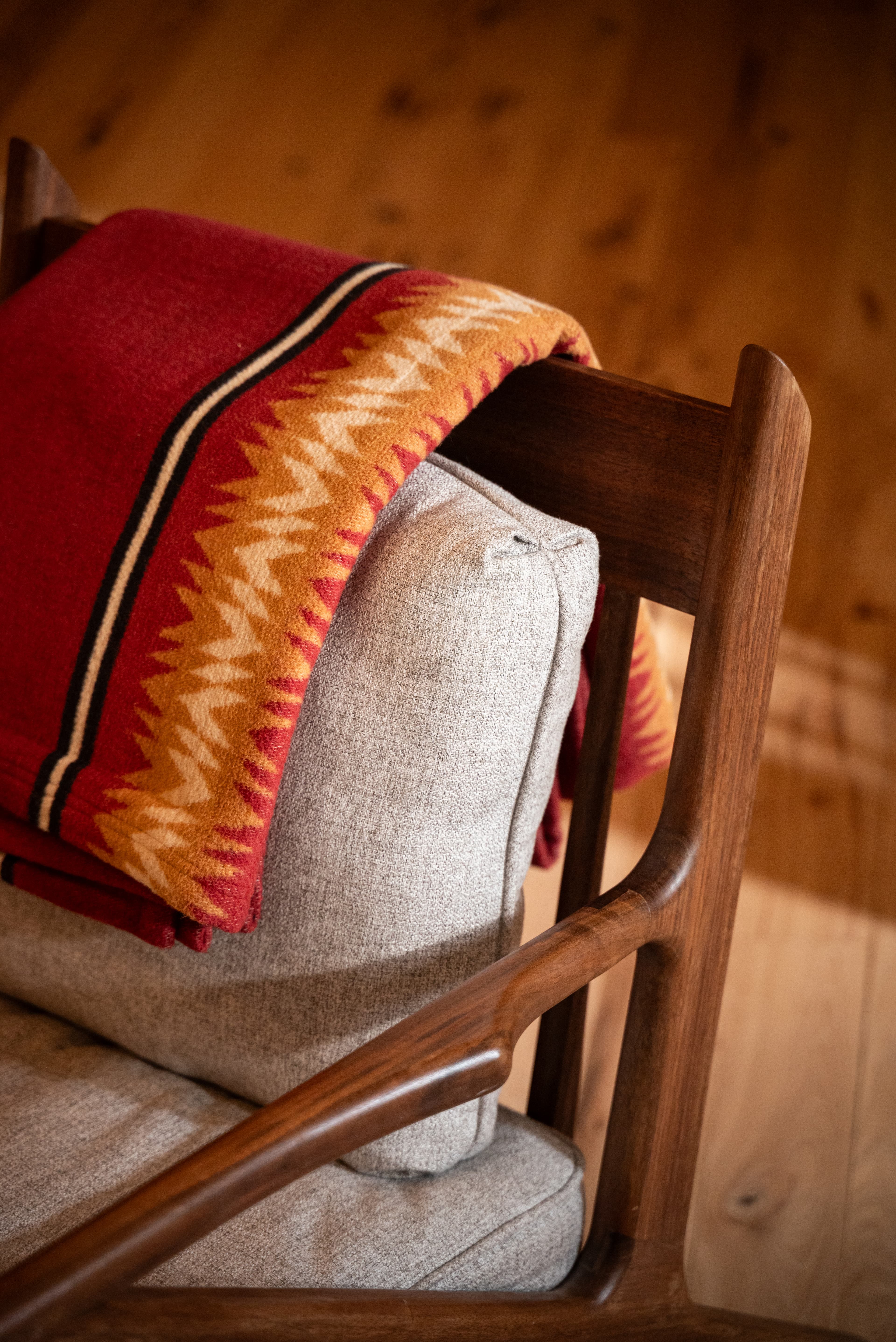
Designed and built for someone I love.
Building the G Chair introduced me to the practice of woodworking. The process taught me how to design within the constraints of my tooling, how to be patient while working with raw materials, and the joy that comes from creating something for somebody you love.
The chair is proportioned and tailored for its intended user. Every decision, from the seat height to the armrest angle, was shaped by who would sit in it. That personal dimension gave the project a sense of purpose that guided the work from start to finish.
Designing the form in Solidworks.
I selected Eastern Black Walnut for its natural beauty, warmth, and resilience. The design evolved through Solidworks, from initial sketches to detailed models that defined the chair's form and proportions.
These CAD models served as the blueprint for every downstream decision: joint placement, grain orientation, and the order of operations for fabrication. Having a precise digital reference made it possible to anticipate problems before committing to cuts.
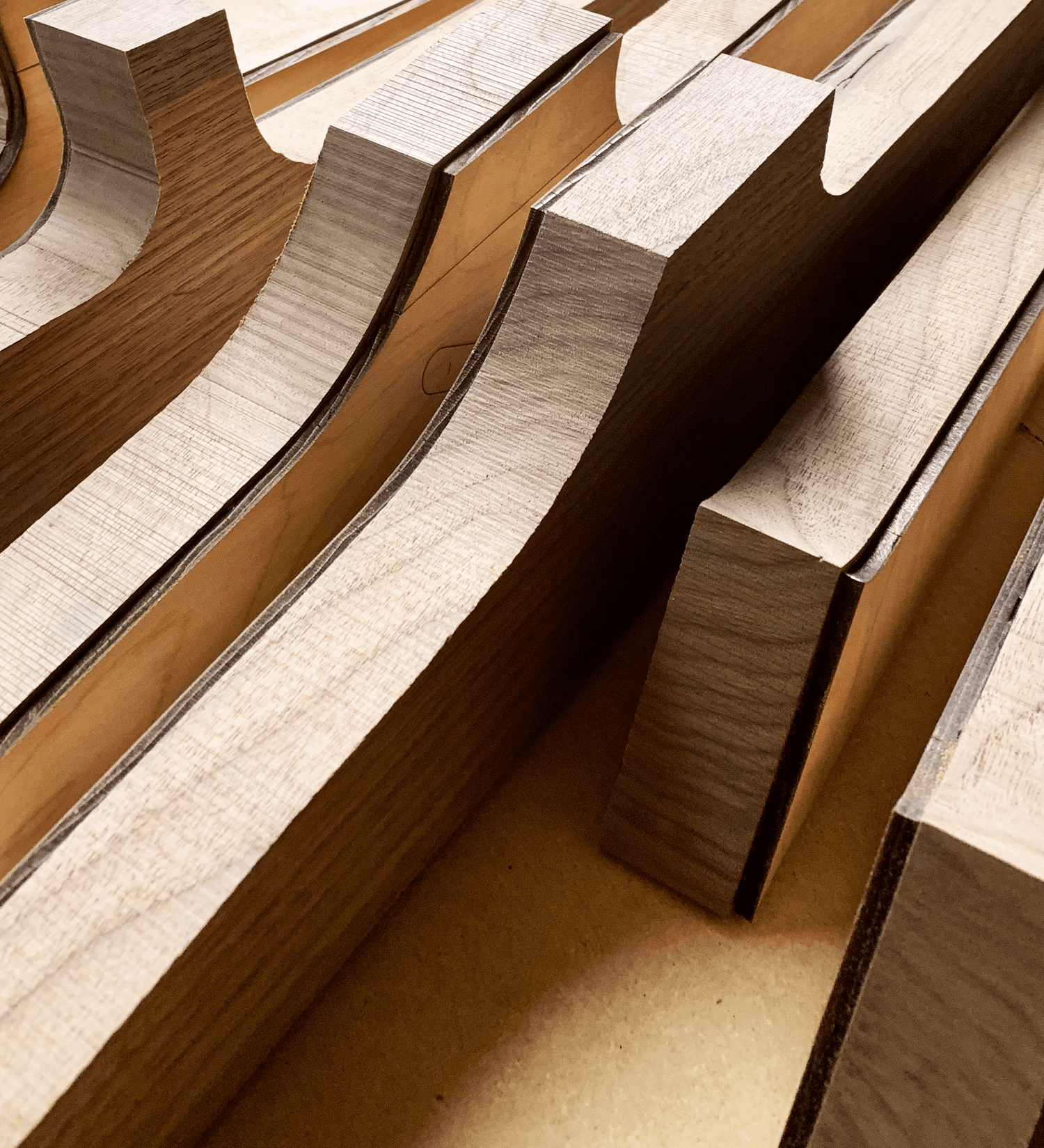
Milling, shaping, and joinery.
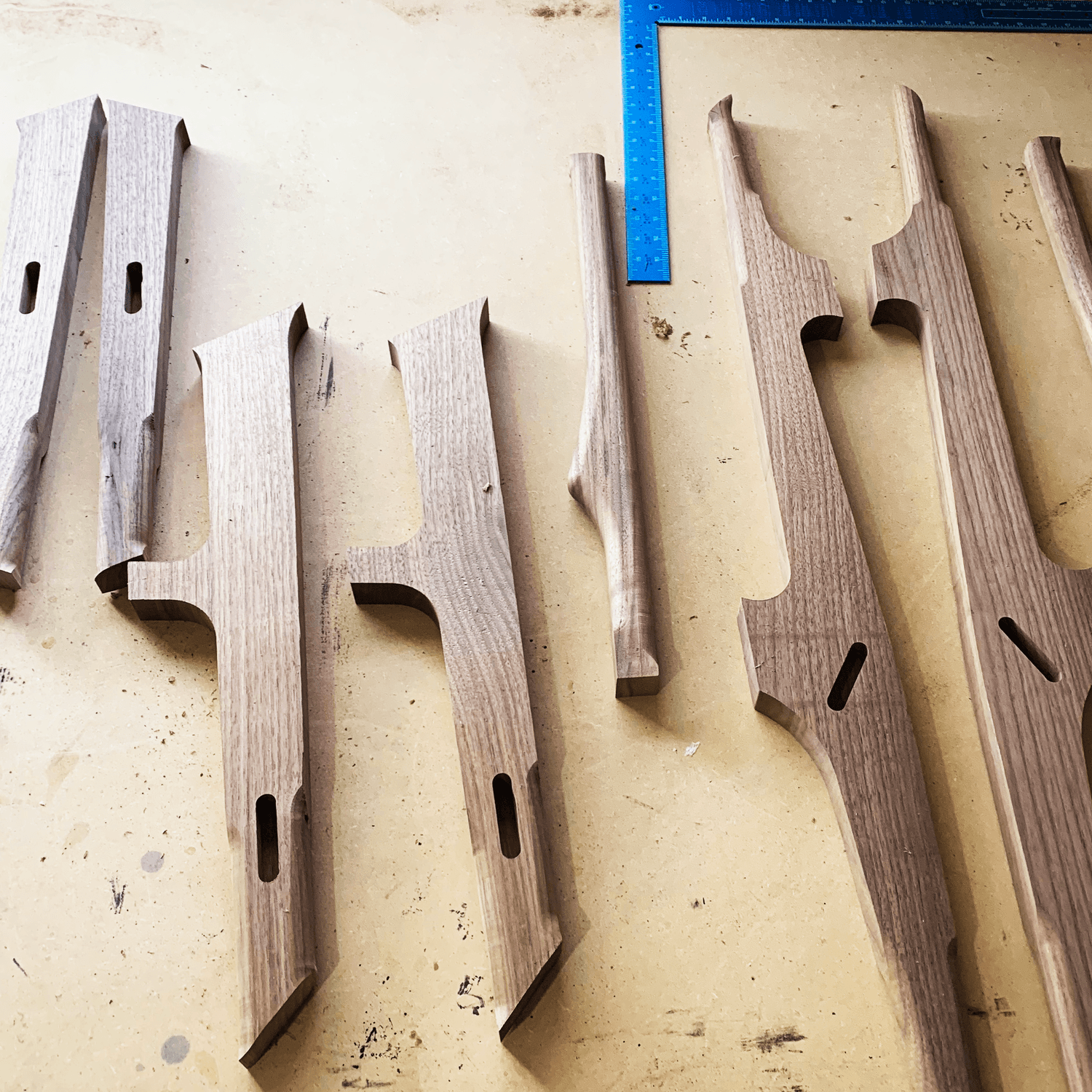
I milled the raw walnut lumber into the necessary stock, then shaped the contours using a band saw, refined them with a table router, and used MDF templates to ensure each curve was consistent and precise.
The joinery combines half-lap and mortise-and-tenon joints, chosen for their durability and clean appearance. Each joint was cut with care, balancing structural integrity with the visual quality of exposed connections.
Finishing and upholstery.
After assembly, I sanded each surface by hand to bring out the warmth and character of the walnut. A natural finish was applied to protect the wood while preserving its grain and color.
I sewed the upholstery myself to provide a soft contrast to the chair's structured form. Crafting this component by hand ensured the finished piece was as comfortable as it was striking.

Key takeaways from this project
- Woodworking as practice: designing and building a chair from scratch introduced me to a craft I had long admired.
- Designing for a specific person: every proportion and detail was shaped by who would use the chair.
- Material and joinery: Eastern Black Walnut paired with half-lap and mortise-and-tenon joints for durability and aesthetics.
- Constraints as a creative tool: working within the limits of available tools and materials sharpened every decision.