The US Energy Map makes the grid visible, compelling, and understandable.
This project began with a systems-level question. Early into my senior semester, I learned about vertical farms in Europe that had recently gone out of business. The Russo-Ukrainian Conflict and the shift from Russian-supplied energy had led to a dramatic increase in energy costs, which these farms could not absorb. This illustrated how supply chain disruption and energy costs can cascade through seemingly unrelated industries.
When the gas was shut off, as it were, there were second order effects that rippled out in all directions.
Without an energy system, we have no food system. I centered my research on energy systems and how fragile critical infrastructure becomes when disrupted.
The grid is much more than power lines. It can be helpful to think of it as comprising four sub-systems: Extraction, Production, Distribution, and Consumption. This project aims to wrangle that complexity into a legible medium, making enormous, critical systems comprehensible for stakeholders and end-users.
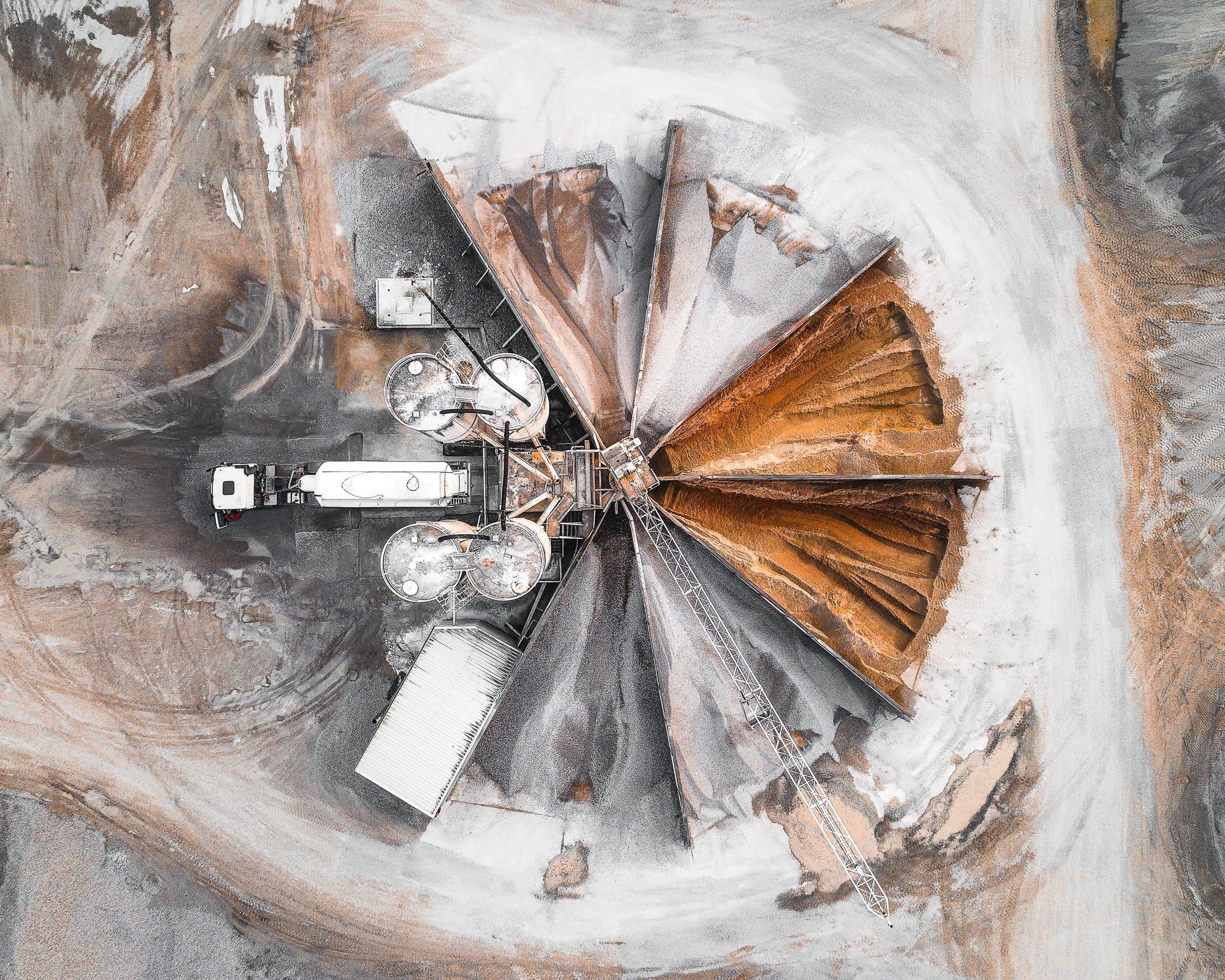
80% of domestic energy production relies on fossil fuels like oil, coal, and natural gas, extracted through wells and mines. Though renewable energy production is not reliant on fossil fuels, its production significantly relies on the earth's mineral resources: vast amounts of copper, silicon, and rare earth metals. The extraction and processing of these materials has environmental and human impacts at a global scale.
Currently, energy production largely involves converting organic matter into electricity through combustion, steam, and turbines. While efficient in converting fuel to electricity, this thermal method of energy production comes with significant environmental costs. Renewable energy sources harness natural processes to generate electricity, but are not without their own unique challenges.
The US energy distribution network is notably fragile and complex. It is not governed by a single entity; rather, it is managed by a myriad of private and public firms. Remarkably, the failure of just 10 key US power substations could trigger a catastrophic collapse of the grid throughout the country.
Energy consumption remains curiously opaque to end-users. Before we can engage in meaningful conversation about decarbonization, it has become clear to me that the complexity of these systems make it difficult for people to comprehend the impact of our energy use. This project aims to bring clarity to these enormous and critical systems, wrangling complexity into a legible medium.
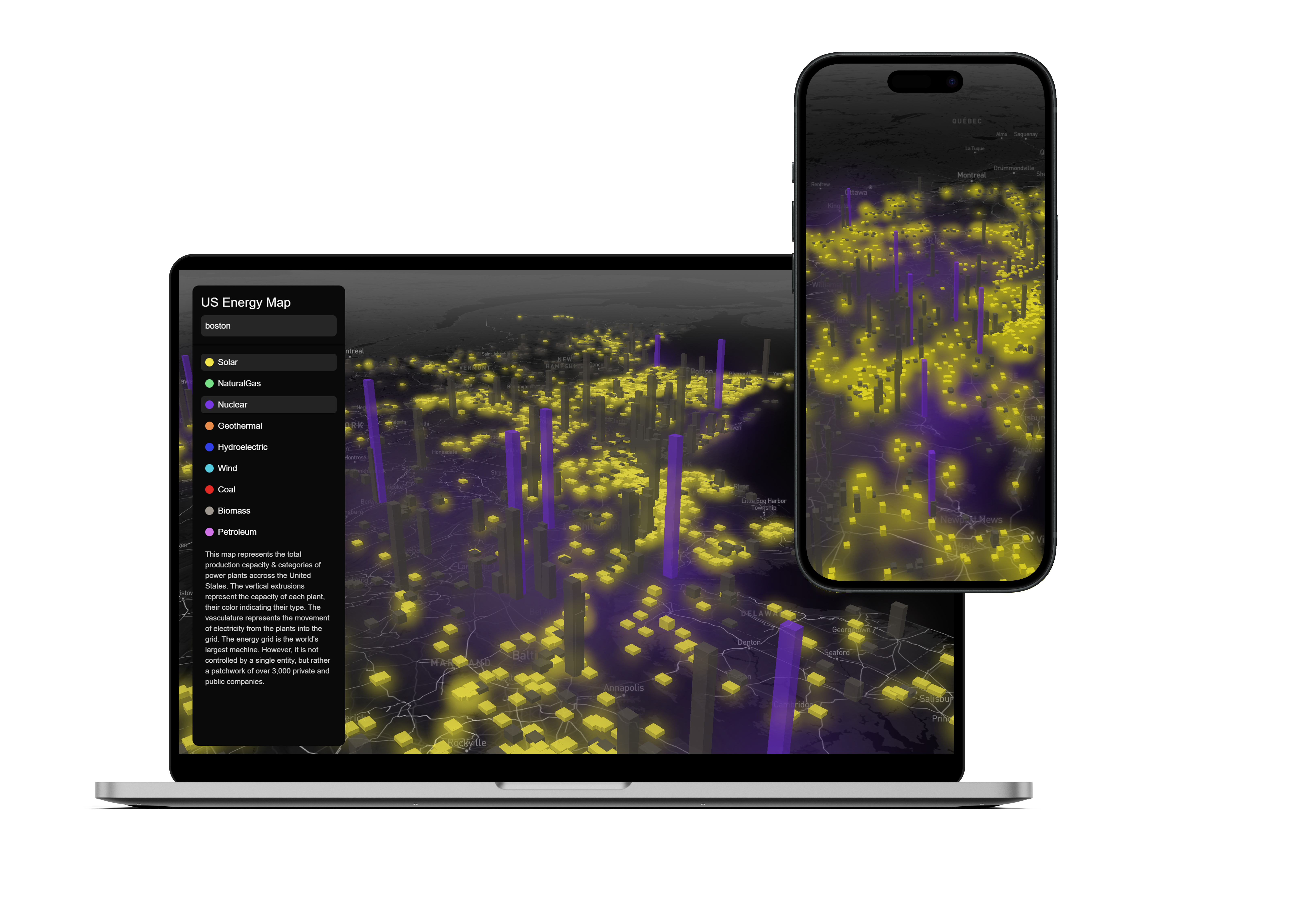
The US Energy Map is a tool that helps users understand the scale of the grid and their position within it.
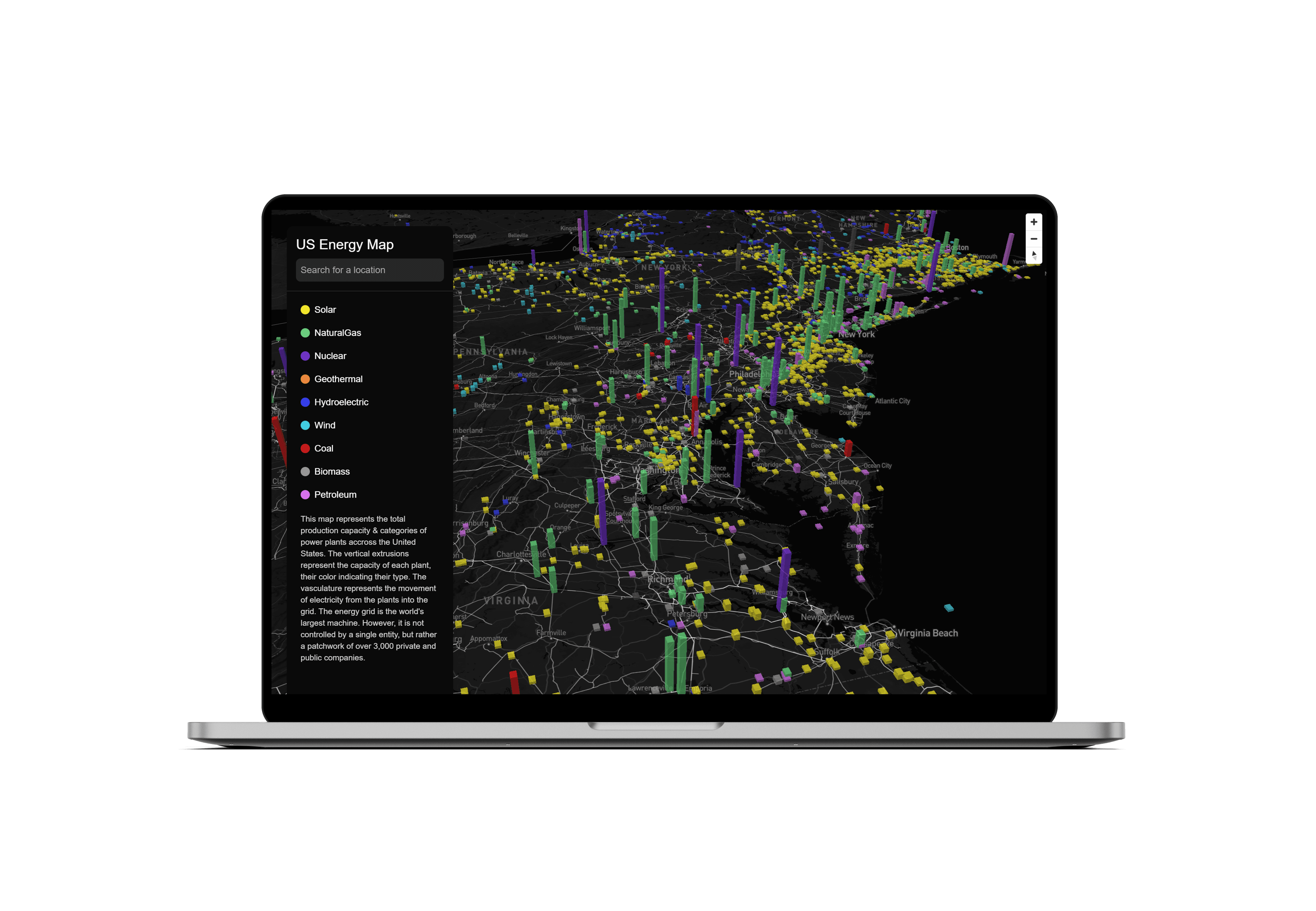
Once I had obtained a better understanding of this system for myself, I set out to build tools that would help others come to share this understanding, specifically within the scope of the United States. The tool offers insight into the energy mix of a given area. Users can search for a location, then isolate particular energy production methods. Vertical extrusions encode plant capacity (height = megawatts); color encodes energy type. The vasculature represents electricity flow from plants into the grid.
I sourced the data that powers the application from the US Energy Information Administration. I was conscious of the inherent subjectivity of data visualization: designers and developers choose what to omit, emphasize, and minimize. I aimed to represent EIA data in an unbiased, objective manner.
Key takeaways from this project
- The vast majority of human systems simply cannot exist without the energy system.
- Decarbonization is only part of the challenge. Resilient, flexible, equitable distribution matters.
- Renewable energy is full of contradictions and paradox. While less fuel intensive, it is more materially intensive on a myriad of mined earth resources.
- Navigating these challenges requires not only technological innovation but also a deep consideration of social, economic, and environmental impact, ensuring that our journey towards sustainable energy benefits all aspects of society.