Printing ice in three dimensions.
Ice as a unique, ephemeral material.
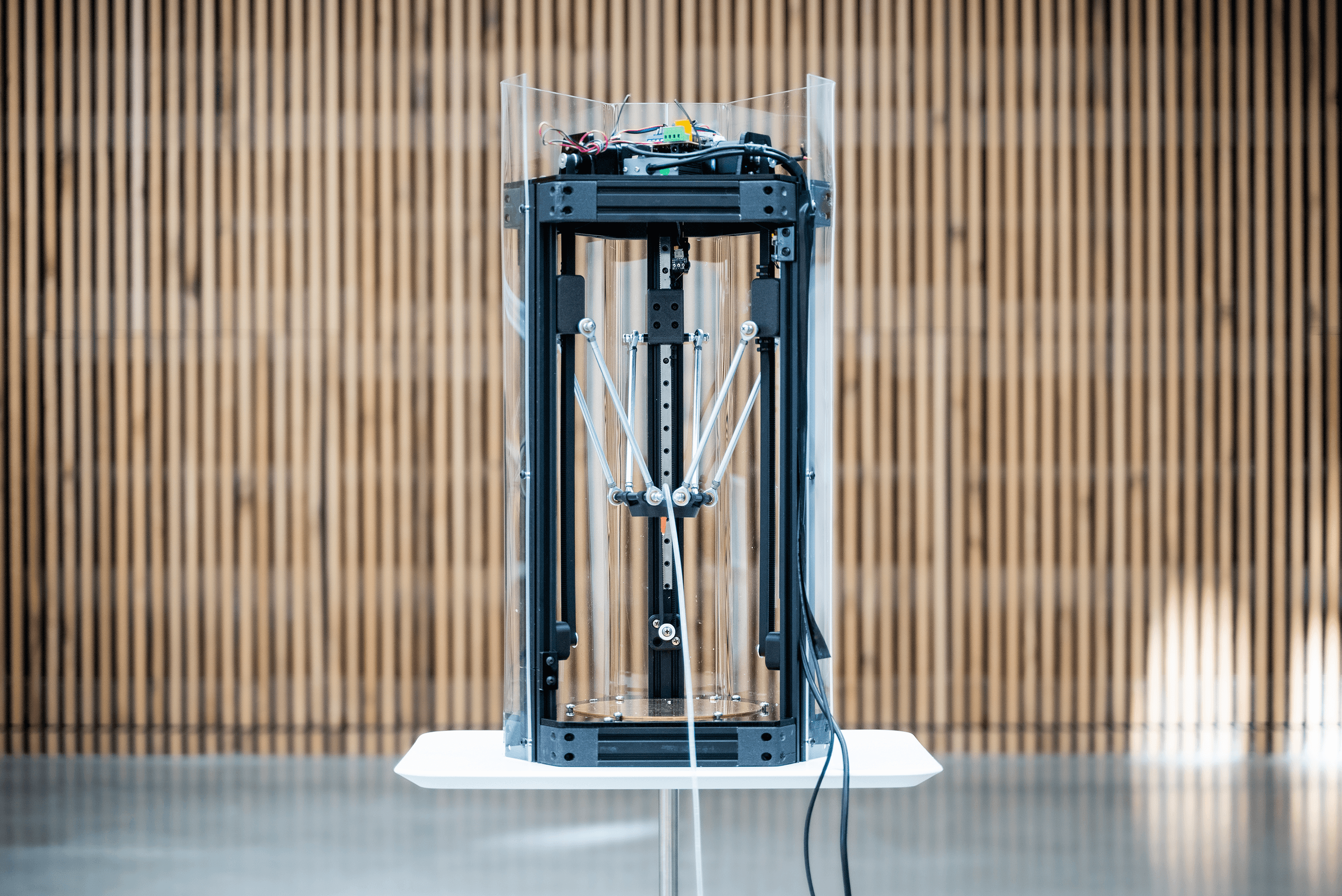
CryoFab is a bespoke 3D ice printer for crafting temporary ice structures. Ice offers promising applications in research and industry as a unique, ephemeral fabrication material.
Three key applications drove the research: biomedical scaffolding, where ice creates precise, biodegradable scaffolds for tissue regeneration; freeze casting, where ice guides porous structures in ceramics and composites; and porous filtration structures, where ice forms tailored porous networks for efficient filtration. Expert validation highlighted 3D printing at cryogenic temperatures to create tissues with extended shelf life for regenerative medicine.
Drive, Chamber, and Chiller.
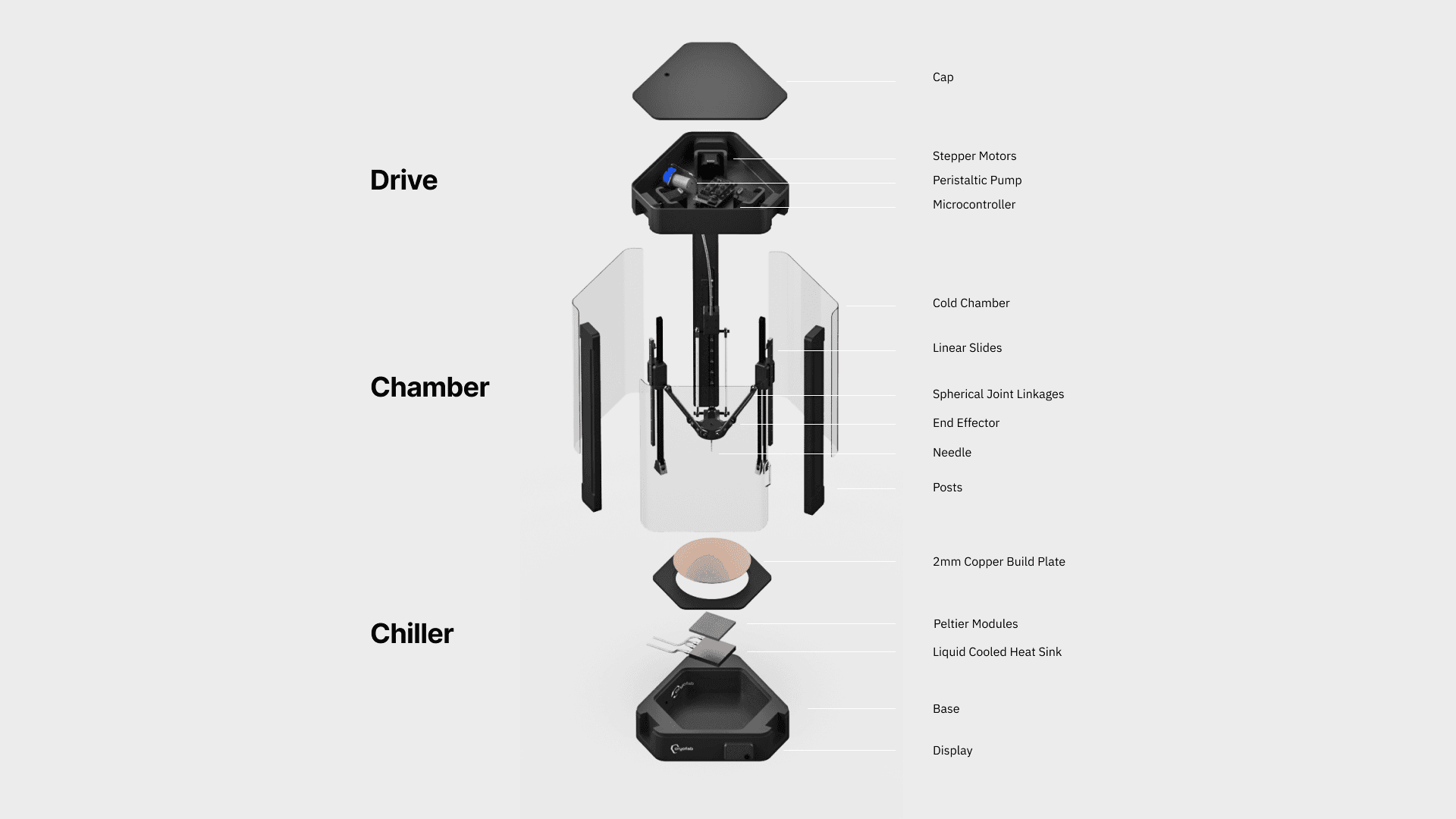
The system is organized into three main subsystems. The drive includes stepper motors, a peristaltic pump, and a microcontroller to control the flow of water. The chamber houses the cold environment, linear slides, spherical joint linkages, end effector, needle, and posts. The chiller uses a 2mm copper build plate, Peltier modules, and a liquid-cooled heat sink to maintain cryogenic temperatures.
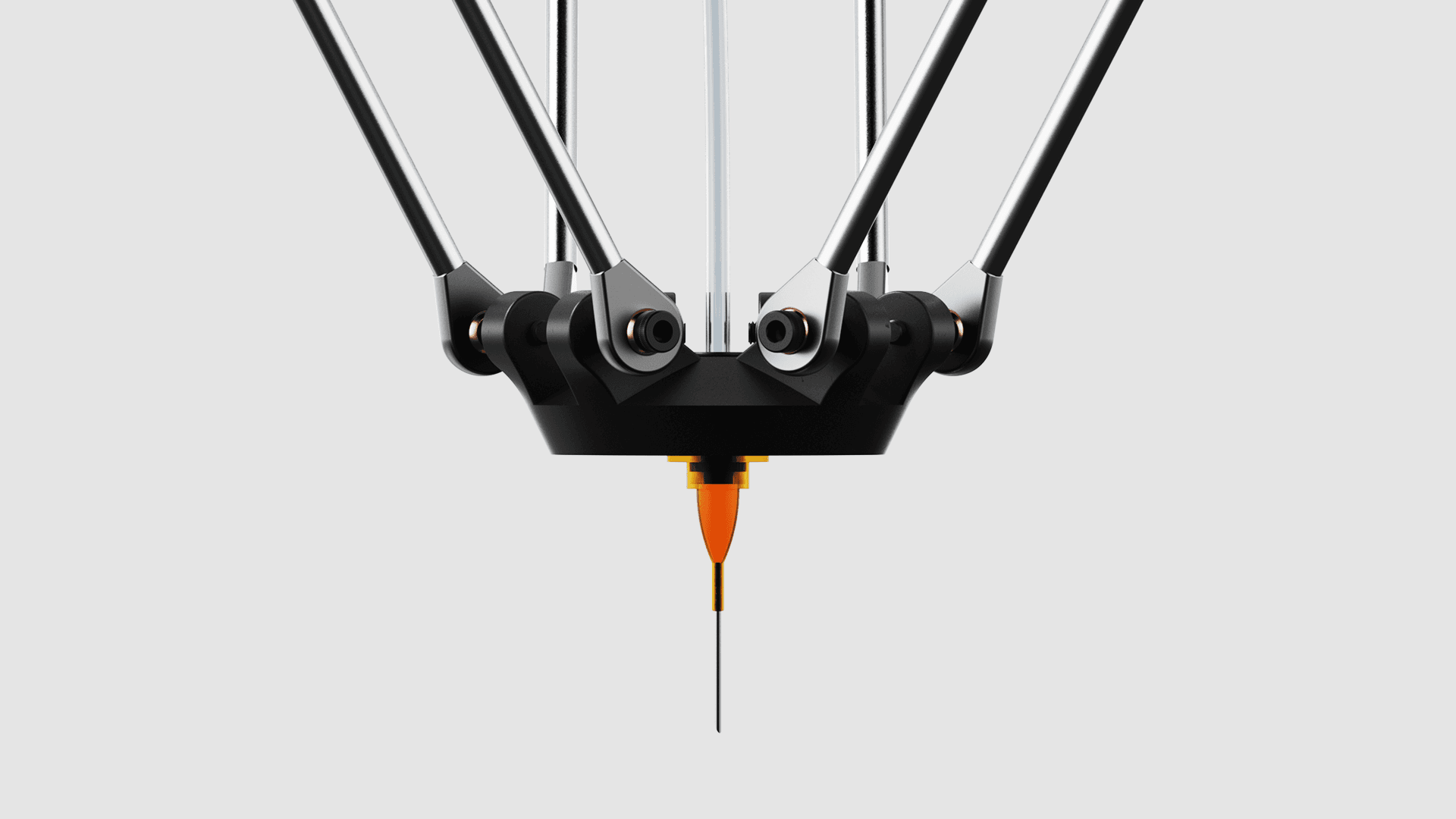
The printer runs on Delta firmware with Marlin software, enabling precise control over droplet deposition and freeze timing for water-based 3D structures.
Custom slicer and G-code pipeline.
Because standard slicers are built for thermoplastic extrusion, we built a custom toolpath pipeline in Rhino and Grasshopper, with C# scripting. The workflow takes Brep surface geometry as input, charts a deposition path across the form, and discretizes that path into a sequence of points. Each point becomes a G-code command: move to position, run the peristaltic pump to deposit a droplet, pause for freeze time, then advance to the next point.
The resulting G-code streams to the printer via Marlin, which drives the Delta kinematics and pump. This end-to-end pipeline gave us full control over layer height, droplet spacing, and freeze timing, which proved essential for tuning ice structure formation.
From water droplets to solids.
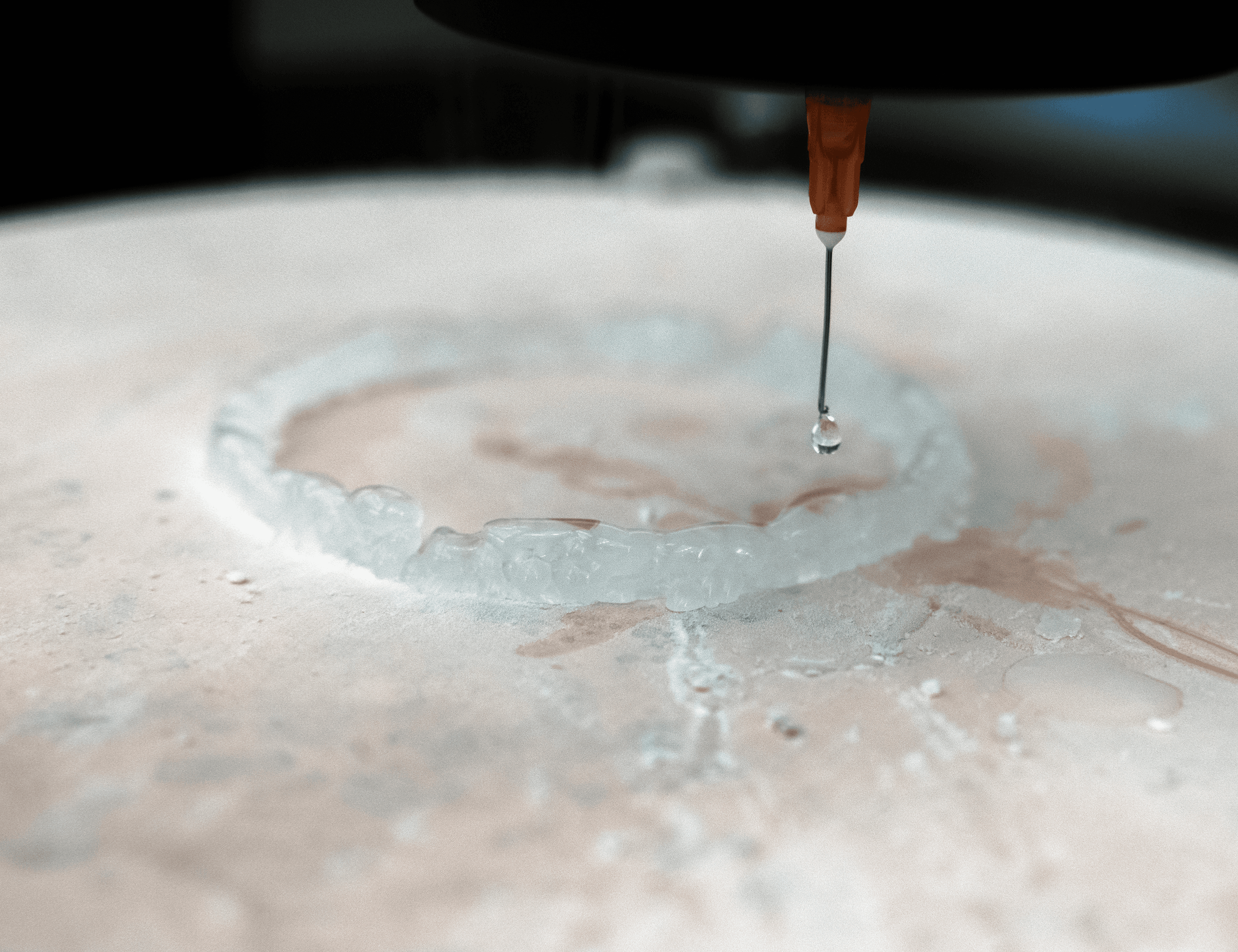
The printer successfully produced a range of outputs: water droplets, simple geometries, lattice structures, and solids. Parameter tuning (radius, height, layer height, and speed) allowed the team to refine droplet freezing and structure formation.
This work was conducted as part of an interdisciplinary team of three: Hana Khurshid (Architecture), Siddhi Patil (Design), and Morgan Doane (Mechanical Design, Solidworks, Fabrication).
Key takeaways from this project
- Hardware research: building a 3D printer that operates at cryogenic temperatures to fabricate ice structures.
- Interdisciplinary collaboration: architecture, design, and engineering working together on a novel fabrication system.
- Ice as fabrication material: exploring ephemeral, biodegradable structures for biomedical, ceramic, and filtration applications.