Conveyors should be modular, reliable, and intuitively assembled.
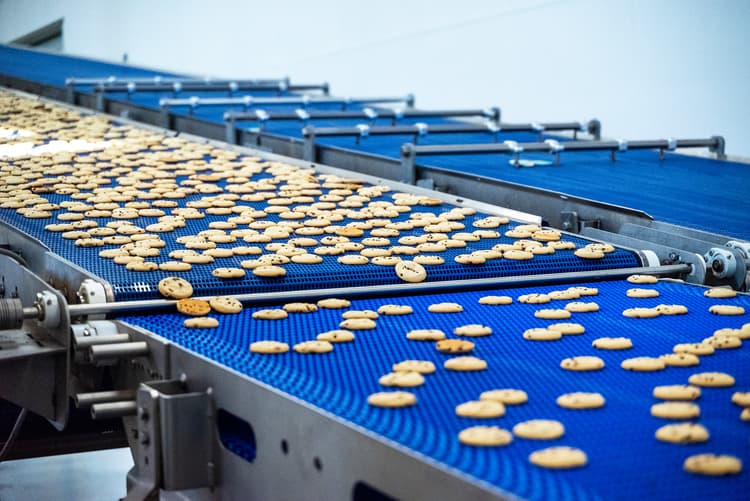
As an employee of Little Dutch Boy Bakeries, I worked as designer, engineer, and project manager for several industrial conveyor systems. To execute these projects, I collaborated with the company's owners on budgets and timelines, with our internal machinist for mill and lathe work, with external fabrication shops for metal and plastic forming, and with colleagues on assembly and maintenance.
I enjoy working across the full product lifecycle, from product vision to manufacturing.
I also developed software to automate our mechanical design process, bridging hardware and software to improve scalability and time-to-market.
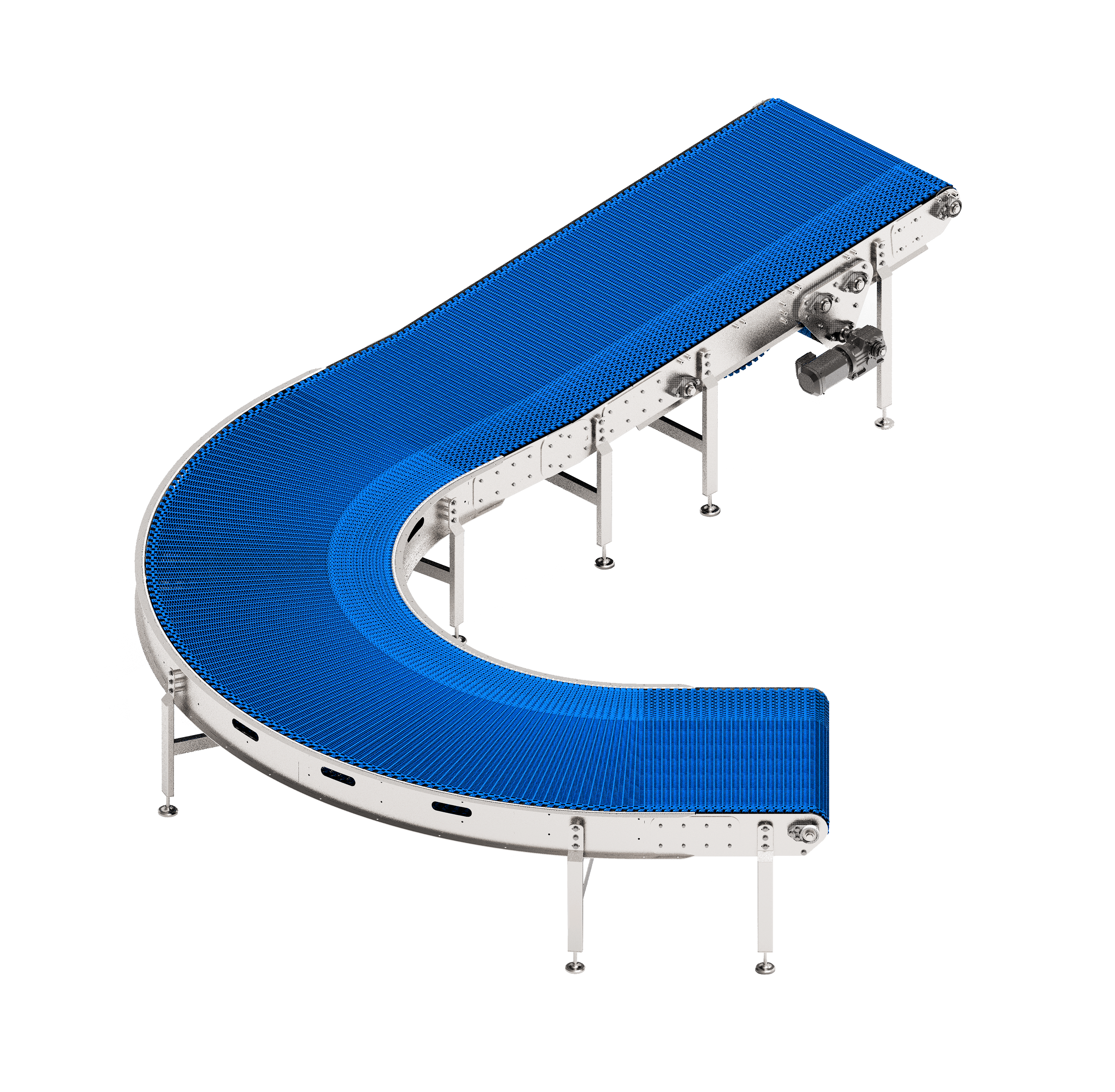
The conveyor systems are composed of modular sections that can be rearranged to accommodate changing business needs.
For example, implementing a new packaging machine may require a conveyor to be rerouted. I designed the conveyor sections to be unopinionated in their relationship to one another, allowing us to reconfigure them quickly and easily.
The company had purchased conveyors from third-party vendors in the past but found them either exorbitantly expensive or unreliable. We set out to build our own machines that would be comparatively inexpensive without sacrificing quality and reliability. We also eliminated a dependency on vendors for maintenance, saving time and money.
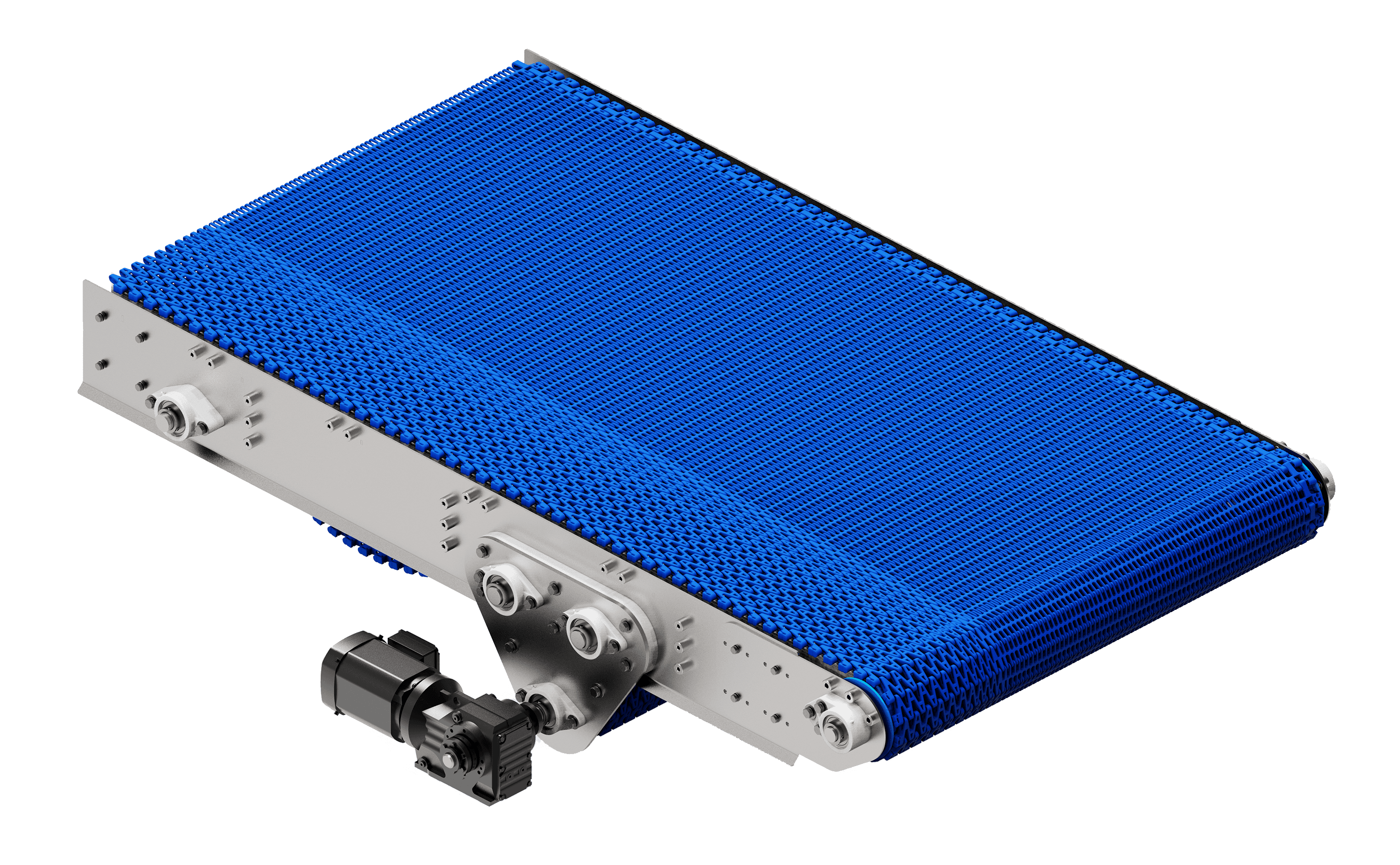
Each conveyor has a drive section that pulls plastic belting through the system.
Each conveyor and subsequent machine needs to move product at the same or gradually faster pace to avoid pileups, especially critical at scale, where a batch of tens of thousands of units could back up quickly.
A motor spins a shaft fitted with sprockets, which drives the belt. The motor's RPM multiplied by the circumference of these sprockets determines the speed at which product moves. This relationship between mechanical design and throughput was central to aligning the system with production requirements.
Software could automate the design process.
As I continued to build new conveyors, it became apparent that the same underlying design logic applied across systems. I began to conceptualize them as a hierarchical, recursive assembly of logical decisions.
I represented these dependencies and relationships in code (TypeScript) rather than in CAD (Solidworks), using object-oriented classes to model parts and assemblies and their relationships. This dramatically increased the speed at which I could produce new variants based on changing inputs, especially with large, nested assemblies. New designs became a matter of running the code with a new set of input parameters.
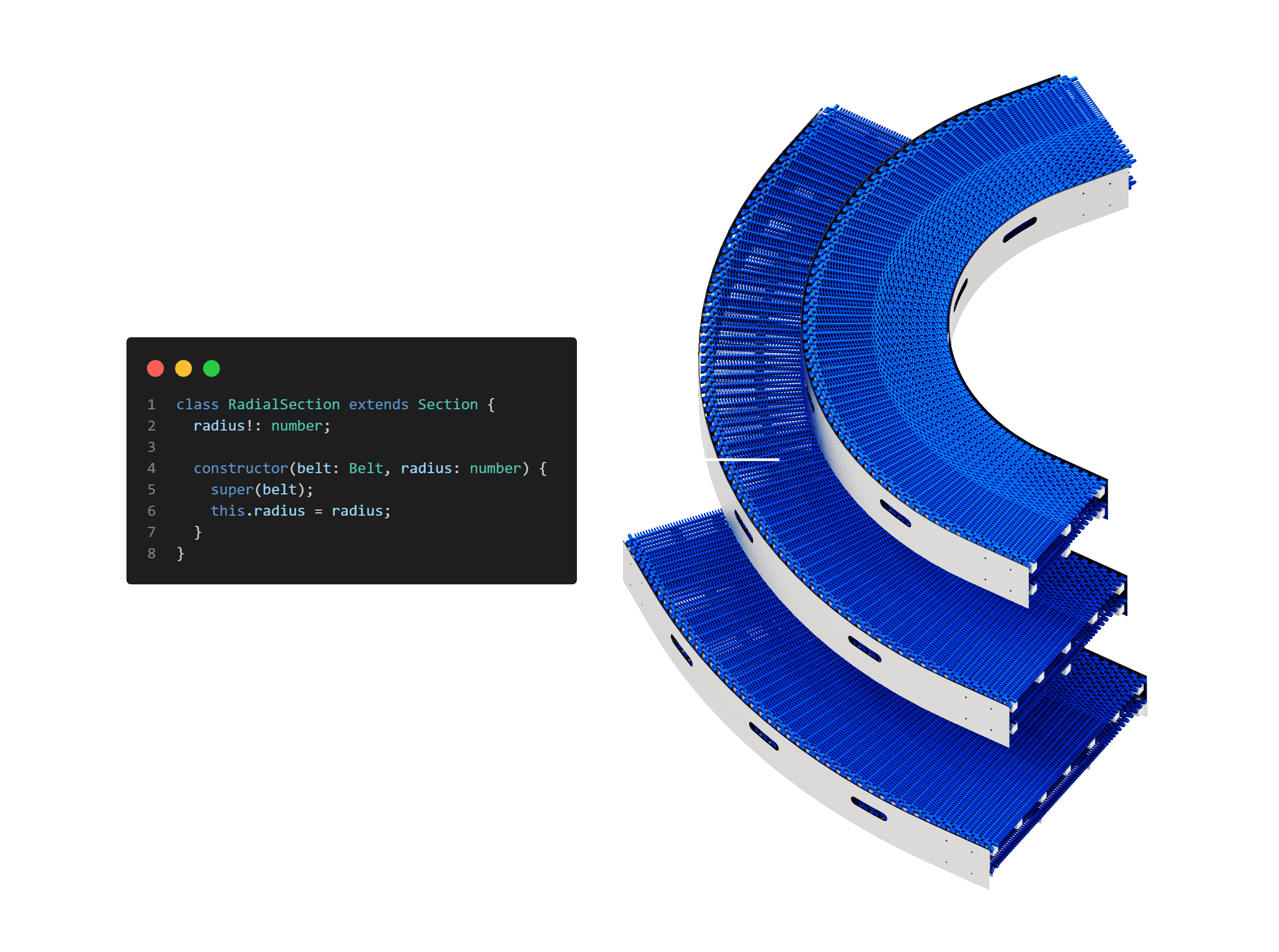
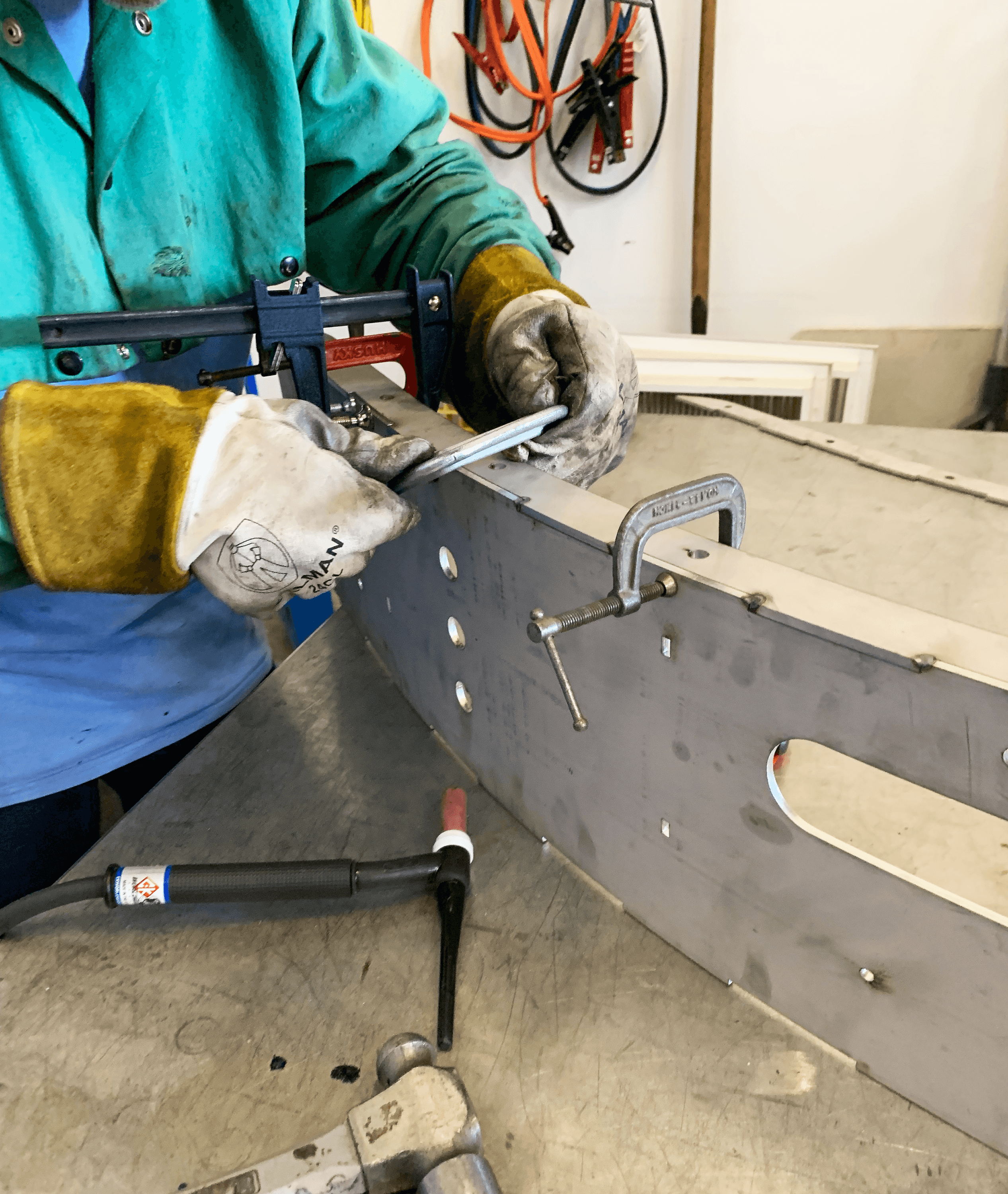
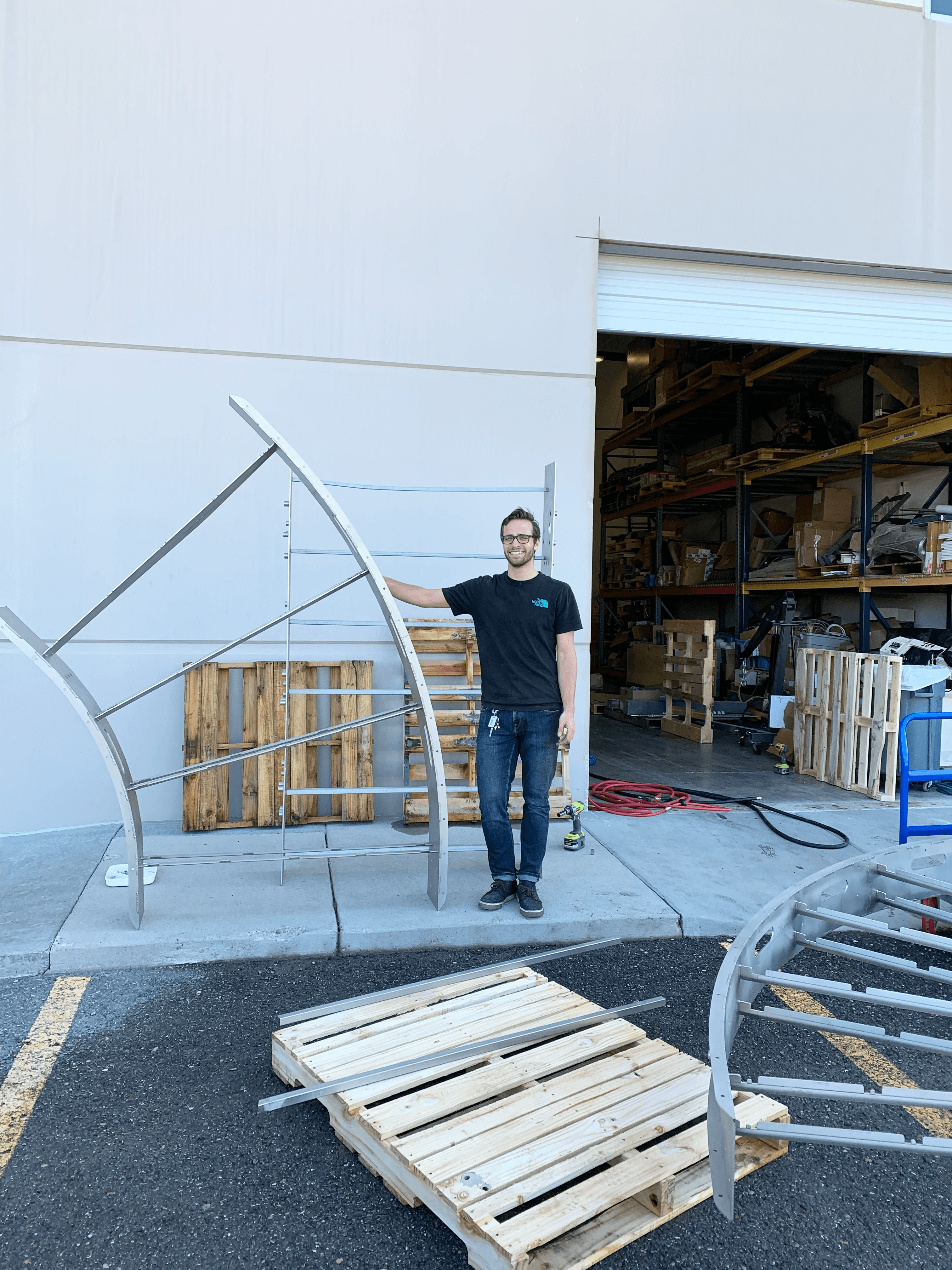
Radial sections presented fabricators with unique challenges.
Curved conveyor sections require gradual, smooth, calculated curves. Misalignments between concentric metal frames can cause the belt to jump out of place, a serious breakdown in the system.
The solution involved laser-cutting the sidewall, sending it through a metal roller to bend in the approximate radius, then welding it to laser-cut keys. These keys ensured the sidewall matched the intended curve with exactness.
I like to make welders happy. It was exciting when a design in the CAD model made their work easier. Design for manufacturability and stakeholder empathy are core to how I approach product development.
Key takeaways from this project
- End-to-end product ownership, from vision and design to manufacturing and maintenance, enables faster iteration and better alignment with business needs.
- Design for manufacturability and stakeholder empathy (e.g., welders, machinists) improve both quality and team morale.
- Software can automate mechanical design workflows, dramatically reducing time-to-market for new product variants.
- In-house capability and vendor strategy can deliver cost savings, reliability, and reduced dependency on external suppliers.